
Disposable Humanity
An illuminating and sobering look at the hidden Holocaust of more than 300,000 people euthanized by the Nazi regime for having mental or physical disabilities.

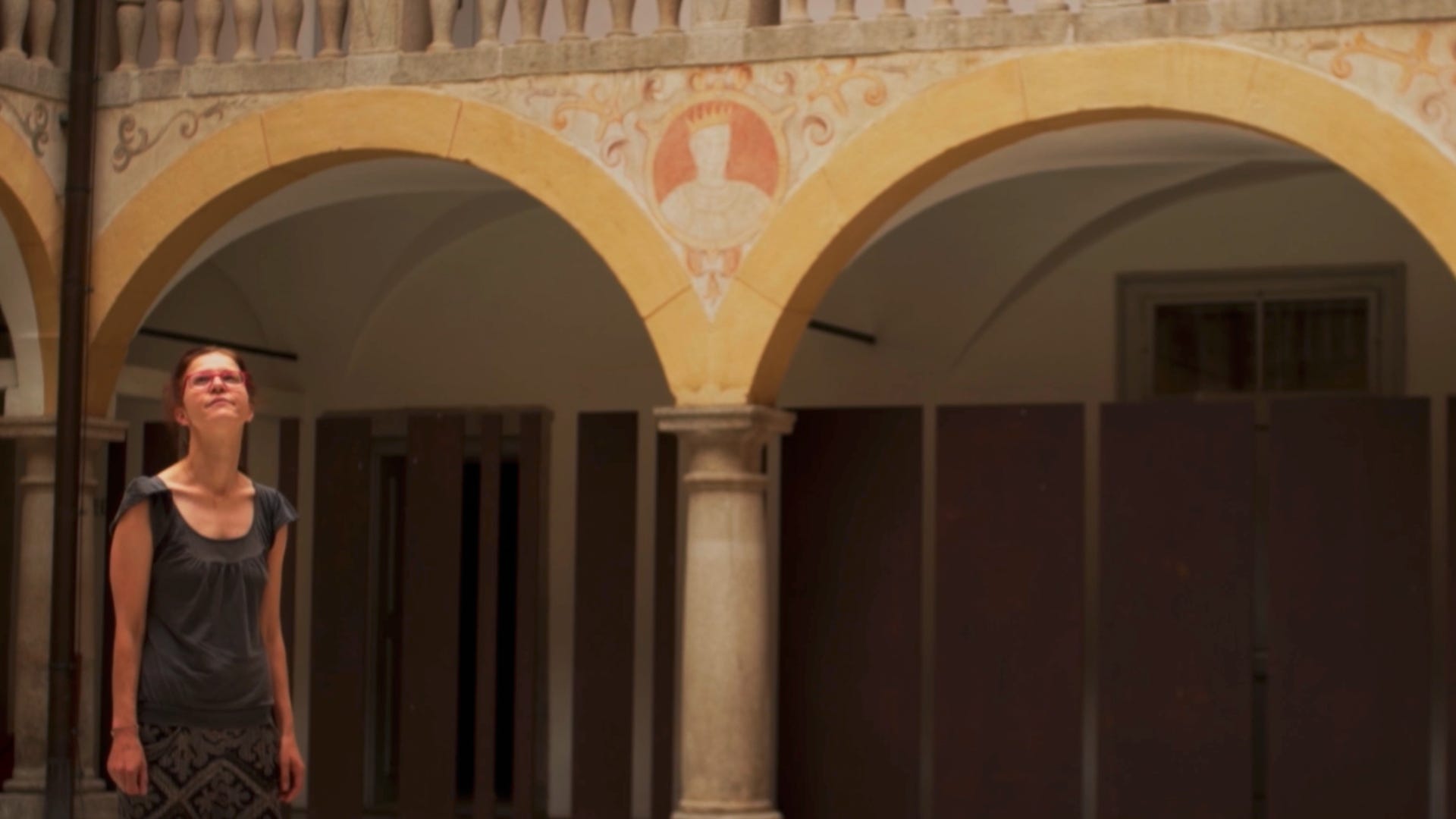

Historically we’ve thought of the Holocaust as being a Jewish eradication, though in the last few decades we’ve gained more awareness that it also targeted homosexuals, Romani people and political prisoners. But one of the largest groups exterminated by the Nazis — people with mental and physical disabilities — have largely been overlooked.
In the illuminating and sobering new documentary, “Disposable Humanity,” we see how that’s part of a pattern of mainstream society treating those with disability as invisible.
In fact, more than 300,000 people were euthanized during Hitler’s sick regime simply because they were seen as genetically impure or a burden upon the German state. Most of them came from psychiatric care institutions, and in fact the doctors, nurses and caregivers were often complicit in who would be selected.
Indeed, there were even cases of experimentation and ‘farming brains’ so they could be dissected and studied. Many of these specimens lingered in storage into the 1980s before they were discovered and given proper interment.
“Disposable Humanity” played at last fall’s “Heartland Film Festival,” but I didn’t get to it. It’s still making its way around the festival circuit and is certainly worthy of nabbing a distribution deal. You can follow on its website for upcoming screenings.
The film’s production has been a family affair for the Mitchells that began nearly 30 years ago, when they traveled to Germany to present on American eugenics. It was at that time they learned about Action T4, which was carried out largely between 1939 and 1941 against people with disability. The German command referred to them as mercy killings.
Cameron S. Mitchell directed the film, with family members David and Emma Mitchell, and Sharon Snyder as key contributors. David and Sharon are disability professors, and David is the foreground speaker and witness, and himself uses a wheelchair.
We visit sites of the atrocities, including places with names like Grafeneck, Hadamar and Hartheim Castle. We learn that often the neighbors knew well about what was happening inside, but like as we’ve heard many times before, they remained silent out of fear (or were unspoken in agreement of the tactics being carried out).
They pore through records, speak to historians and descendants of those who were killed. Unfortunately with more than 80 years having passed, there simply aren’t many living survivors. This emotionally gripping film must act as their voice, eyes and ears.
Some of the things they come across will turn your stomach. Such as medical forms with a blank space left for the doctor to decide the patient’s fate: a blue minus symbol to indicate they will live, a red plus sign that says they have been selected for death.
Propaganda shorts shown in German cinemas were deliberate in monstrous depictions of people with disability to make them scary and ‘otherized.’ Even those who weren’t killed were treated like cattle, with slogans like “sterilization is liberation” to justify these acts.
In some ways, the euthanasia of those with disability served as a teaching ground for the Jews and other groups. The use of gas chambers and crematoriums got a trial run in the early days of World War II, later to be scaled up. The filmmakers document one instance where incinerator doors were shipped to a concentration camp for further use.
Even as Germany has worked to memorialize its past, it can result in some strange and sometimes disturbing dichotomies. For example, at Bernburg Memorial they have a display for patients who were trucked away for elimination, but the facility still operates as a functional hospital.
“Disposable Humanity” can be a tough watch. But I’m glad I had the chance to catch up with an important film I might otherwise have missed. In the face of unimaginable atrocity, the impulse is there to look away and bury it in the past. These stories need to be told, over and over again, so that we never do.