
Highest 2 Lowest
Spike Lee and Denzel Washington are back for a fifth collaboration in this stylish remake of a Japanese crime classic that may just be the filmmaker's best effort since "Malcolm X."

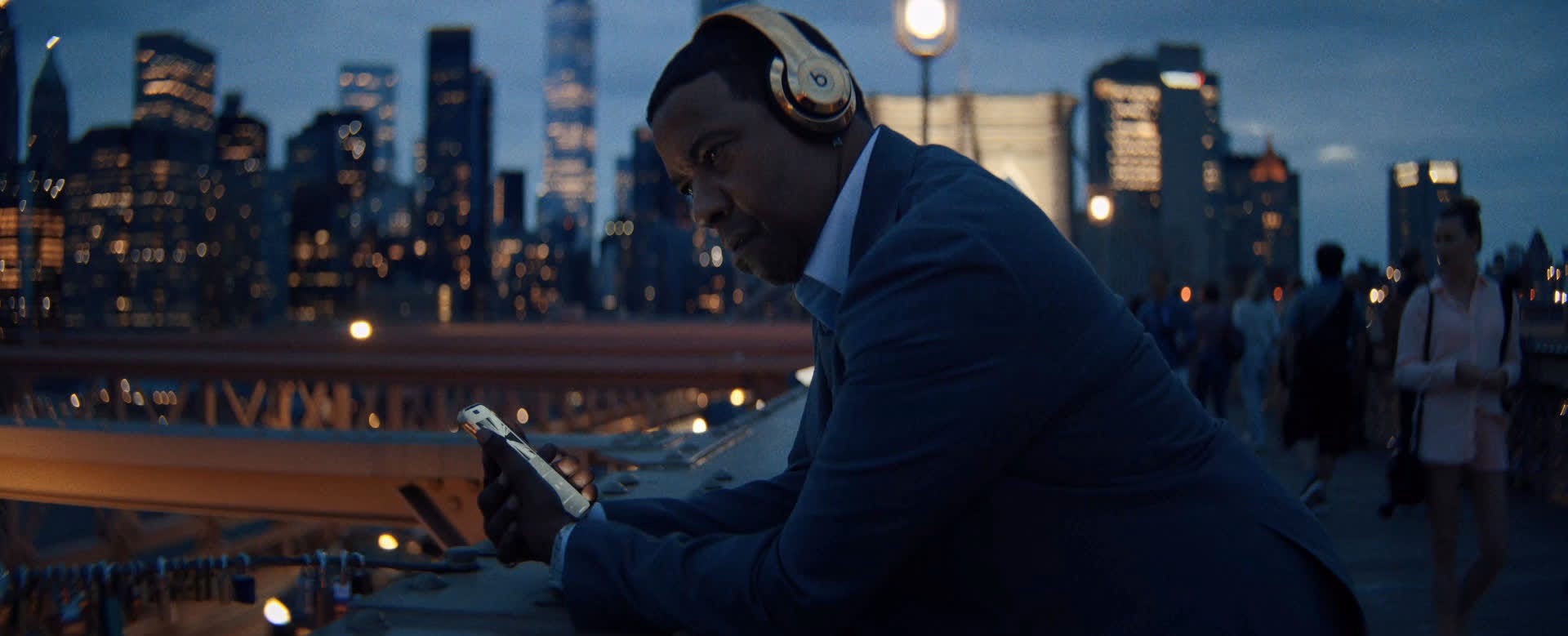

“All money ain’t good money.” — David King
I was surprised “Highest 2 Lowest,” the fifth and latest collaboration between filmmaker Spike Lee and Denzel Washington, has gotten so little fanfare. It’s only in a modest number of theaters, hasn’t had much of a media buildup and wasn’t screened for critics anywhere outside of the biggest cities.
(That last point is sadly S.O.P. these days, though.)
Strange, given that their fruitful partnership has produced some of Lee’s best films: “Malcolm X,” “Inside Man” and “He Got Game” among them.
Well, hopefully audiences will still find their way to “Highest.” Because it belongs in the top tier of Lee’s filmography — I’d say his best effort since “Malcolm X.”
It’s a remake of one of my favorite Akira Kurosawa films, 1963’s “High and Low,” based on the novel “King’s Ransom” by Evan Hunter. It wears the clothes of a conventional crime thriller, but really is a deep study of the cavernous gap between the powerful and the downtrodden, and how their moralism is only revealed when their places are flipped.
The story is a variation on a familiar theme: a titan of business has his son kidnapped by evildoers demanding an extravagant sum of money. This event has the unfortunate timing to arrive right as he’s about to pull off the deal of a lifetime, and his liquid funds are critically low. If he pays the ransom, he’ll be ruined.
No real dilemma, you’d say. Any man worth his salt would quickly pay to save the life of his only son. And David King, often referred to as just “The King,” is certainly that, a legendary music mogul on the mold of Quincy Jones, a devoted family man and upstanding citizen.
But there’s a twist to the story… one I’d rather not reveal. If you’ve seen Kurosawa’s classic, you already know what it is, but the trailers for “Highest 2 Lowest” don’t overtly reveal it, so I won’t either on the off chance it could hold a surprise for you.
Suffice to say, David is faced with a situation where he can still save his son and not pay, but others might be hurt. So he has to weigh the value of his empire versus the integrity of doing right by others.
Aubrey Joseph plays Trey, David’s 17-year-old son who was taken from basketball practice. (Real-life Lakers star Rick Fox plays himself, as the coach — those are the circles the Kings run in.) He’s eager to follow in his father’s footsteps at Stackin’ Hits records, famous for finding undiscovered Black artists and turning them into stars.
Ilfenesh Hadera is Pam, David’s wife and no silent partner. Jeffrey Wright plays Paul Christopher, David’s chauffer/best friend/confidante. Paul did hard time years ago and put his life back together with David’s help. He’s also got a personal stake in that his own son, Kyle (Elijah Wright), is friends with Trey and was at the same practice where the snatching took place.
Naturally, the cops — John Douglas Thompson, LaChanze and Dean Winters play the squabbling detective trio on the case — look hard at Paul as being behind the kidnapping. Possibly the thought has even occurred to David.
As negotiations play out over the phone, David find himself humbled talking to the kidnapper, played by ASAP Rocky and eventually revealed to have a connection to the music business himself. David is a guy who’s graced the cover of magazines and newspapers for the past 30 years — they’re all displayed in his office — and is not used to being dissed and sworn at. But if he wants to save a young life, he’s forced to knuckle under, swallow his pride and follow instructions.
The plot goes through the usual chase-chase stuff, the exchange of $17.5 million — delivered in $1,000 Swiss franc notes because $100 bills would be too heavy — and an elaborate system of cutouts and fake-outs on the streets of Upper Manhattan. It’s well-done stuff, and Lee harnesses his considerable aesthetic skills to elevate the material way above standard, such as the chase barging through a Puerto Rican street festival featuring Eddie Palmieri.
It’s emceed by Rosie Perez, playing herself, and a number of other thespians from legacy Lee films make cameos, too.
It’s another bravura performance from Washington, playing a man who is careful to strike a note of humility in his dealings with others, though we wonder if he really feels it. He’s well-used to his stature and expects others to regard him with a touch of awe. David’s not a bad guy, but he’s been at the top of the mountain so long he can’t see what’s happening down in the canyon shadows.
There’s some wonderfully tense one-one-one stuff between Rocky as the kidnapper, particularly toward the end in a way we don’t see coming. The primary relationship, though, is with Paul, and Wright is just quietly terrific as a guy a who understands he’s just “the man next to The Man,” but still insists upon his due dignity.
The camera work by Matthew Libatique is fluid and inventive, a hallmark of Lee’s films. The musical score by Howard Drossin is nearly omnipresent, from trickling piano during the action scenes to borderline melodramatic strings during the weepy stuff.
This is the sort of film that effortlessly entertains while forcing us to think. Is it right that someone like David has so much when others struggle? Is he better than his peers, or just standing on their shoulders? What happens when a good man is threatened with having everything taken from him? How about a bad man presented with the opportunity for everything he ever wanted?
Here’s one answer: when it comes to judging what end “Highest 2 Lowest” stands in both Washington and Lee’s careers, crane your neck up.