
Two Women
A Canadian film about the right of suburban moms to go full horndog aims high — for laughs, pathos, and social commentary.


If you’re exhausted by regular politics, how about some sexual politics, French Canadian-style? The French (Québécois, in this case) do sex-themed movies with more laissez-faire zaniness than anyone. “Two Women” is true to that spirit, as it probes the vast expanse in our culture between #MeToo and OnlyFans.
Meet Florence (Karine Gonthier-Hyndman), a restless, depression-prone woman with a 10-year-old son and overly earnest husband. After her neighbor Violette (Laurence Leboeuf)—a new mom with an unfaithful husband—thinks she hears bird-like sounds of lovemaking coming from Florence’s flat, they both begin to ponder what the pursuit of unbridled lust might look and feel like.
So Florence decides to ditch her libido-killing meds, striking fear in her husband David’s (Mani Soleymanlou) heart. “I wasn’t suicidal!” says Florence. ”I just wasn’t afraid to die.” “Our relationship is best when one of us is on anti-depressants,” David replies calmly, dodging his wife’s advances.
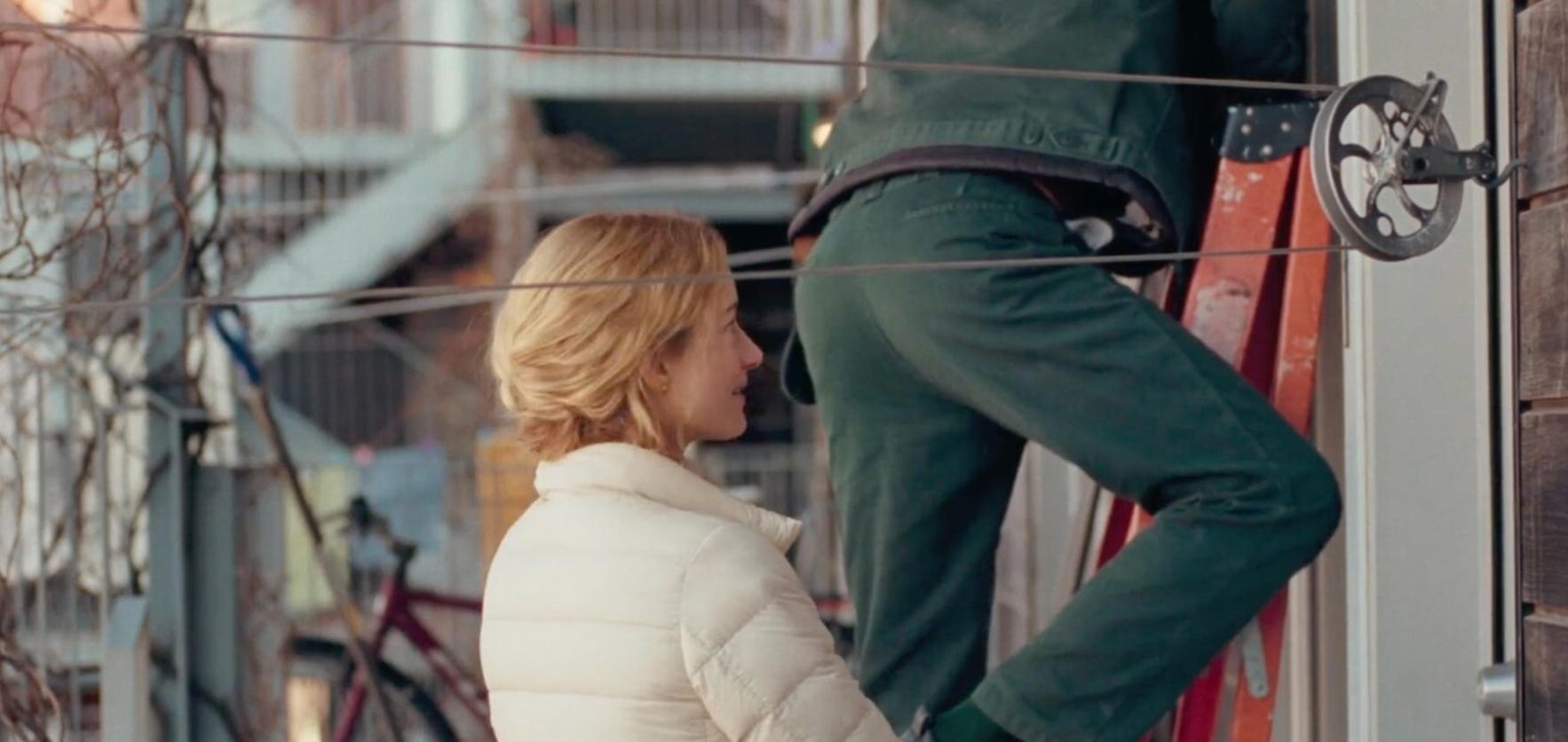
Now free of pharmaceutical regulation, Florence examines her own body in the mirror, then flashes a lineman fixing a telephone pole out her window. Next conquest? the cable guy.
Meanwhile, as Violette’s husband (Félix Moat) cavorts with a coworker with an agenda of her own, Voilette gets freaky with an exterminator. The film dares you to guess at the end game of the pursuit of sexual pleasure by two moms, and dares you not to eyeroll at the cartoonish stereotype of the hunky handyman who welcomes every advance. [When I discovered that this film is an adaptation of a 1970 sex comedy called “Two Women in Gold,” I had the answer as to why “Two Women” feels weirdly out of date].
While much of the randiness is played for chuckles, “Two Women”—directed by Chloé Robichaud from a screenplay by Catherine Léger—doesn’t feel like the comedy it is billed as. Instead, it’s a covert effort to wrestle with mental illness, the expectations of motherhood, the crisis of masculinity, infinite definitions of pleasure, and the age-old “problem” of the woman with a sexual appetite.
I’m always up for a film on this subject, but there are tonal problems. To wit: as the tension mounts and she’s driven to sexual distraction, Florence’s son says: “it’s like you don’t like being my mom.” She replies, “Actually, it’s what I love the most.” But nothing in the film corroborates that. And that’s fine, in a “Kramer vs. Kramer” sort of way. Florence is a welcome unruly character, among several in the film. “You don’t get a medal for doing the right thing,” she says.
I’ll give the makers of “Two Women” a small medal for trying to tackle a prickly subject with a combo of cuteness and complexity.