
Young Washington
OG POTUS gets a rip-roaring historical adventure chronicling his early days as an ambitious climber whose mistakes started a war and cost lives, but proved the forge to mold greatness.

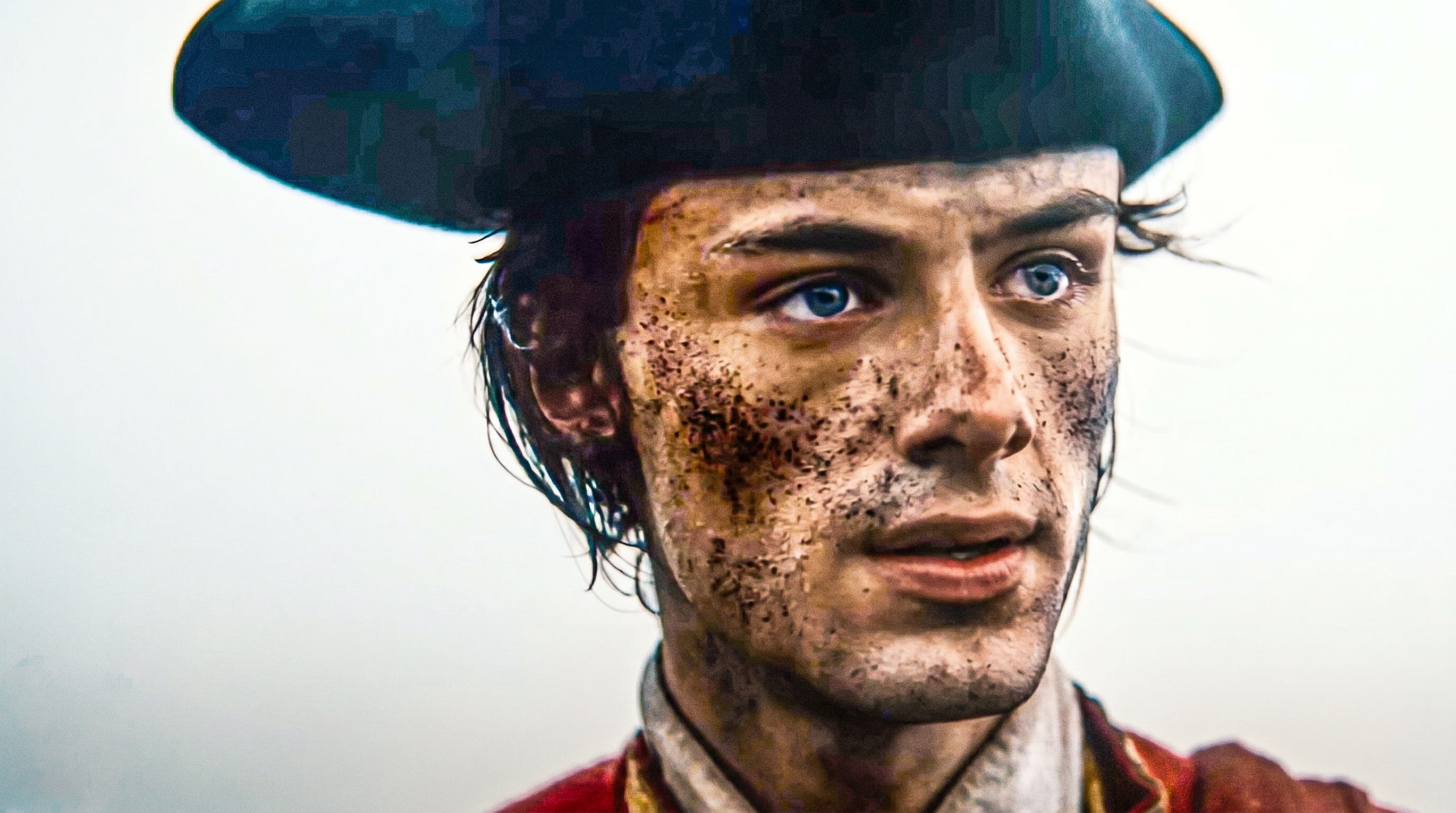

Hollywood hasn’t exactly done great with presidential biopics of late. “Lincoln” was the last one I remember that was very good, and before that my brain can’t summon any going back several decades. “Young Mr. Lincoln” starring Henry Fonda in 1939 might just be the previous standout.
“Young Washington” may not soar to quite those highest of heights, but it’s also something you can’t often say about a historical piece: supremely entertaining. This is a rip-roaring adventure chronicling the OG POTUS’ early days as an ambitious climber whose callow mistakes started a war and cost lives, but proved the forge necessary to mold greatness.
After a brief prelude looking at his childhood, including the early death of a father, this portrait of George Washington really only centers on a few years: 1753 to 1755. During this time Washington, still in his early 20s, surveyed the wilderness to the west of the British colonies (meaning Ohio and Pennsylvania), romanced the daughter of a prominent family, got himself commissioned as an officer despite no military experience, managed to start a war through his own ineptitude and surrendered a fortress.
Not exactly the resume of a future Great Man.
But if there’s a lesson to be taken from this movie, it’s that people like Washington are not crushed by failure, but genuinely learn from it. A year after his embarrassment at the start of the French and Indian War — including signing an accord in which he admitted assassinating a French commander, causing an international incident — Washington redeemed himself at the Battle of Monongahela, saving their forces from a total rout after their British general was killed.
About that… yes, George Washington fought for the British. Not only that, according to the movie he volunteered his service, accepting no pay rather than rates below that of royally commissioned Brit offers. Before he fought the Redcoats to a standstill, he wore the uniform himself.
Washington is played by William Franklyn-Miller, who’s so tall and lanky he almost seems to disappear into his spot-on period costumes. He gives a vivid performance as a man determined to make something of himself, even to the point of taking unnecessary risks and refusing to admit when he’s wrong. But perseverance is his great virtue, and Franklyn-Miller gives us hints at the towering figure Washington would become.
The boy Washington was taken under the wing of his much-older half-brother, Lawrence (John Foss), who inherited their father’s Mount Vernon farm estate. Though he was denied a formal education, George was given lessons to hone his mind and manners, making him determined to earn the respect of their British masters.
“Obedience can be commanded. Respect must be earned,” he is instructed.
Sneaking into a party thrown by the wealthy British planter Thomas Fairfax (Kelsey Grammer), Washington comes away with two prospects: a job surveying the untamed lands to the west — ostensibly owned by the English but under the growing control of the French, who aligned with the native peoples residing there — and the interest of Fairfax’s daughter, Sally (Mia Rodgers), who finds herself intrigued by the dashing, overly confident colonialist.
Later he impresses the Virginia governor, Robert Dinwiddie (Ben Kingsley), an officious and calculating sort, who needs a disposable expedition to scout out the French forces. Accompanied by his friend and frontiersman, Christopher Gist (Leo Hanna), they put together a force of rough-hewn Virginia recruits.
Washington also manages to earn the respect of the Half-King, Tanacharison (Ryan Begay), a Seneca leader with a very personal grudge against the French. Unfortunately, Washington’s lack of command control over his troops results in a massacre, which triggered the French and Indian War.
Humiliated, Washington returns home to find Thomas dead of consumption. Now a wealthy tenant farmer, he still yearns to be something more, and takes the advice of his mother (Mary-Louise Parker) to try again. He offers himself as an aide to the British General Braddock (Andy Serkis), who thinks the mighty British army can bring its stand-in-a-line tactics to the hit-and-run fighting along the frontier.
Directed by Jon Erwin, who co-wrote the screenplay with Tom Provost and Diederik Hoogstraten, “Young Washington” boasts some truly riveting battle scenes, despite this not being a very high-budget film. (It’s being distributed by Angel Studios, known best for their faith-based movies, though there’s nothing about the content to distinguish it from a secular mainstream film.)
Cannon fire screams and musket balls whiz by with alarming proximity. And there’s plenty of hand-to-hand fighting, too, with the various native tribes showing the stiff-collar types how it’s done. Washington has several near-misses where rounds pierce his uniform but not his body.
The film makes a few nods to the historical realities of the time, such as how the Native Americans were manipulated by the French and English, and the fact that Washington’s family owned slaves. (As did most rich colonialists.) There’s also a couple of minor characters, slaves owned by the Fairfaxes who are sent to fight in their stead.
But “Young Washington” is more concerned with derring-do than exploring unpleasant history. Released for the 250th anniversary of America’s founding, it’s not a jingoistic picture but more concerned with how someone like George Washington rose from obscurity to one of our nation’s most important figures.
It’s a fast-paced, well-acted extravaganza that prompted me to read more about these exploits, stuff half-remembered from childhood lessons now brought to galvanizing life.